Subscribe
 67°
67°
Full Moon, Planet Pairing, Meteor Showers Coming: Here's When To Keep An Eye On The Sky
The night sky is about to deliver a rapid-fire series of spectacles, giving stargazers three reasons to look up over just five nights.
With clear skies and a little planning, sky-watchers can capture all three events. No special equipment is required.
Sturgeon Moon
The final full moon of meteorological summer rises Friday evening, Aug. 8, and glows all night into Saturday, Aug. 9.
August’s moon is best known as the Sturgeon Moon, but Indigenous peoples also call it the Black Cherry Moon, Ricing Moon and Mountain Shadows Moon, according to AccuWeather.
Watch it climb the south…
Best Viewing Chances Coming In 'Parade Of Planets': Here's When To Keep Eye On Sky
Skywatchers, get ready for an unforgettable weeks-long celestial spectacle.
This rare phenomenon, nicknamed the "Parade of Planets," offers a unique opportunity for viewers to observe multiple planets in the night sky.
What to Expect
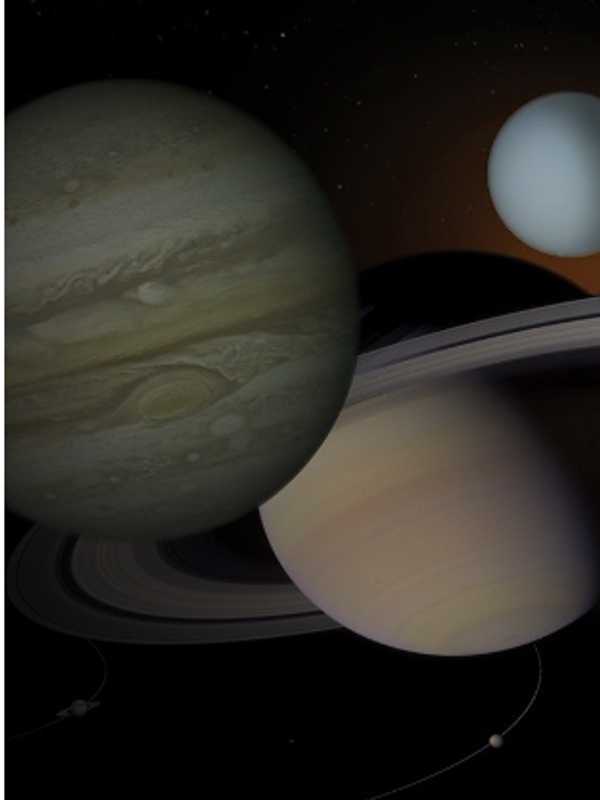
Shortly after sunset through mid-February, the six planets -- Jupiter, Mars, Neptune, Saturn, Uranus, and Venus -- will align across the night sky.
"Venus, Saturn and Neptune will be bunched together low in the southwestern sky, while Mars, with its distinct reddish hue, Jupiter and Uranus will glow higher in the southern sky," according to AccuWea…
Parade Of Planets: Rare Celestial Lineup Set To Dazzle Night Skies
A rare celestial phenomenon is about to light up the heavens, offering skywatchers a chance to marvel at the dynamic beauty of our Solar System.
This February, a "Parade of Planets" will see all seven of Earth’s planetary neighbors align in a dazzling display.
The main event occurs on Friday, Feb. 28, when Saturn, Mercury, Neptune, Venus, Uranus, Jupiter, and Mars will appear in the night sky at the same time.
Stretching in a neat row along the ecliptic, this alignment promises to be a feast for the eyes, with bright Venus and Jupiter taking center stage while the fainter Neptu…