Tag:

Stargazing

Saturn’s Brightest Night, Fall Equinox Coming Back-To-Back Saturn’s Brightest Night, Fall Equinox Coming Back-To-Back
Saturn’s Brightest Night, Fall Equinox Coming Back-To-Back Two marquee celestial moments will headline late September, giving stargazers a bright planet to admire and a seasonal reset back on Earth.  Forecasters say Saturn will hit its brightest night of the year on Sunday, Sept. 21, followed by the autumnal equinox at 2:19 p.m. Eastern Time on Monday, Sept. 22. Sunday, Sept. 21: Saturn At Opposition (Brightest Of 2025) At opposition, Earth sits directly between the Sun and Saturn, putting the ringed planet opposite the Sun in our sky. This is when Saturn appears at its closest, brightest, and largest for the year. Saturn will rise at sunset…
Double Celestial Treat: Venus Meets Jupiter, Meteor Showers Follow Hours Later Double Celestial Treat: Venus Meets Jupiter, Meteor Showers Follow Hours Later
Double Celestial Treat: Venus Meets Jupiter, Meteor Showers Follow Hours Later Skywatchers are in for a two-part cosmic spectacle: a rare Venus-Jupiter pairing followed by the peak of the Perseid meteor shower.  Tuesday, Aug. 12 will dawn with brilliant Venus sidling up to mighty Jupiter in the eastern twilight, and by nightfall the year’s most dependable meteor show will be streaking overhead. The planetary rendezvous starts around 4 a.m. local time when Venus, the brightest beacon in the sky, slides to within less than one degree of Jupiter.  Hold a pinky finger at arm’s length and you will cover the gap. The duo rises higher through dawn and repeats almo…
Super Sturgeon Moon Will Rise With Biggest, Brightest Glow Of Summer: Here's Timing Super Sturgeon Moon Will Rise With Biggest, Brightest Glow Of Summer: Here's Timing
Super Sturgeon Moon Will Rise With Biggest, Brightest Glow Of Summer: Here's Timing The Full Sturgeon Moon is about to crest the eastern horizon swelling into one of 2025’s brightest and largest supermoons. Unlike an ordinary full moon, a supermoon occurs when our satellite reaches or nears perigee — its closest orbital point to Earth — making it appear up to 14 percent larger and 30 percent brighter than when it hangs at apogee.  This month’s lunar show peaks precisely at 3:55 a.m. EDT on Saturday, Aug. 9, but astronomers say the moon will seem full and strikingly luminous from Thursday evening, Aug. 7 through early Monday, Aug. 11. Why “Sturgeon”? The August full m…
Night Skies To Sparkle As Meteor Showers Peak: Here’s Timing Night Skies To Sparkle As Meteor Showers Peak: Here’s Timing
Night Skies To Sparkle As Meteor Showers Peak: Here’s Timing Stargazers are in for a rare treat at month’s end, when two separate meteor showers each peak activity on the same night, promising a combined rate of up to 30 “shooting stars” an hour. According to the American Meteor Society, some of those streaks could blaze across the sky as brilliant fireballs, outshining everything but the Moon and brightest planets The dual peak — Southern Delta Aquariids and Alpha Capricornids — will unfold from the evening of Tuesday, July 29, through the pre-dawn hours of Wednesday, July 30. The spectacle will give observers across the Northern Hemisphere a fron…
Thunder Moon First In Trio Of Upcoming Celestial Shows: Here's When To Watch Thunder Moon First In Trio Of Upcoming Celestial Shows: Here's When To Watch
Thunder Moon First In Trio Of Upcoming Celestial Shows: Here's When To Watch Stargazers will be treated to a trio of celestial shows in the weeks ahead, starting with the rise of the Thunder Moon on Thursday night, July 10.  Named for the seasonal storms that rumble across North America, this bright full moon will rise in the southeastern sky around nightfall. It will shine through the night before setting near sunrise. It's also known as the Full Buck Moon, a term connected to the quick growth of antlers on male deer in the middle of the summer. Later in the month, skies will glow with something even more dramatic: a rare meteor shower doubleheader. …
Best Viewing Chances Coming In 'Parade Of Planets': Here's When To Keep Eye On Sky Best Viewing Chances Coming In 'Parade Of Planets': Here's When To Keep Eye On Sky
Best Viewing Chances Coming In 'Parade Of Planets': Here's When To Keep Eye On Sky Skywatchers, get ready for an unforgettable weeks-long celestial spectacle. This rare phenomenon, nicknamed the "Parade of Planets," offers a unique opportunity for viewers to observe multiple planets in the night sky. What to Expect Shortly after sunset through mid-February, the six planets -- Jupiter, Mars, Neptune, Saturn, Uranus, and Venus -- will align across the night sky.  "Venus, Saturn and Neptune will be bunched together low in the southwestern sky, while Mars, with its distinct reddish hue, Jupiter and Uranus will glow higher in the southern sky," according to AccuWea…
Celestial Event Has Skywatchers In Awe Celestial Event Has Skywatchers In Awe
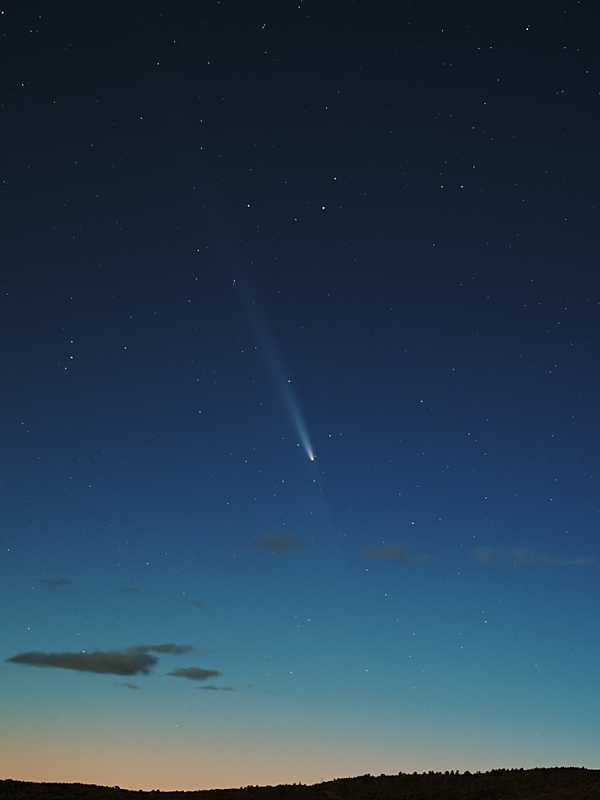
Celestial Event Has Skywatchers In Awe Stargazers are being treated to a once-in-a-lifetime event this month — make that 1,000 lifetimes.  Comet Tsuchinshan-ATLAS made a guest appearance in the night sky as it came within 44 million miles of our homeworld last week, and it is dazzling astronomers and novice skywatchers alike.  Stargazers got their best view of the comet on Tuesday, Oct. 15, but it will remain visible with the unaided eye through the end of the month as it rises higher and higher in the night sky until it is gone, according to NASA.  The comet won't make another pass of Earth for another 80,…
Here's When To Watch Most Popular Meteor Show Of Year Here's When To Watch Most Popular Meteor Show Of Year
Here's When To Watch Most Popular Meteor Show Of Year The best meteor shower of the year is about to peak. The Perseid meteor shower, marked by swift and bright streaks, frequently leaves long "wakes" of light and color behind as it moves through Earth's atmosphere, according to NASA.  The most significant activity is expected to occur on the night of Sunday, Aug. 11, into the early morning hours of Monday, Aug. 12, and possibly Tuesday, Aug. 13. Perseids are best viewed in the Northern Hemisphere during the pre-dawn hours, though meteors from this shower can be seen as early as 10 p.m. NASA says. EarthSky.com says that "the best t…