Tag:

Skywatching

Double Celestial Treat: Venus Meets Jupiter, Meteor Showers Follow Hours Later Double Celestial Treat: Venus Meets Jupiter, Meteor Showers Follow Hours Later
Double Celestial Treat: Venus Meets Jupiter, Meteor Showers Follow Hours Later Skywatchers are in for a two-part cosmic spectacle: a rare Venus-Jupiter pairing followed by the peak of the Perseid meteor shower.  Tuesday, Aug. 12 will dawn with brilliant Venus sidling up to mighty Jupiter in the eastern twilight, and by nightfall the year’s most dependable meteor show will be streaking overhead. The planetary rendezvous starts around 4 a.m. local time when Venus, the brightest beacon in the sky, slides to within less than one degree of Jupiter.  Hold a pinky finger at arm’s length and you will cover the gap. The duo rises higher through dawn and repeats almo…
Northern Lights Will Dance Across Half Of US: Here's When To Catch Them Northern Lights Will Dance Across Half Of US: Here's When To Catch Them
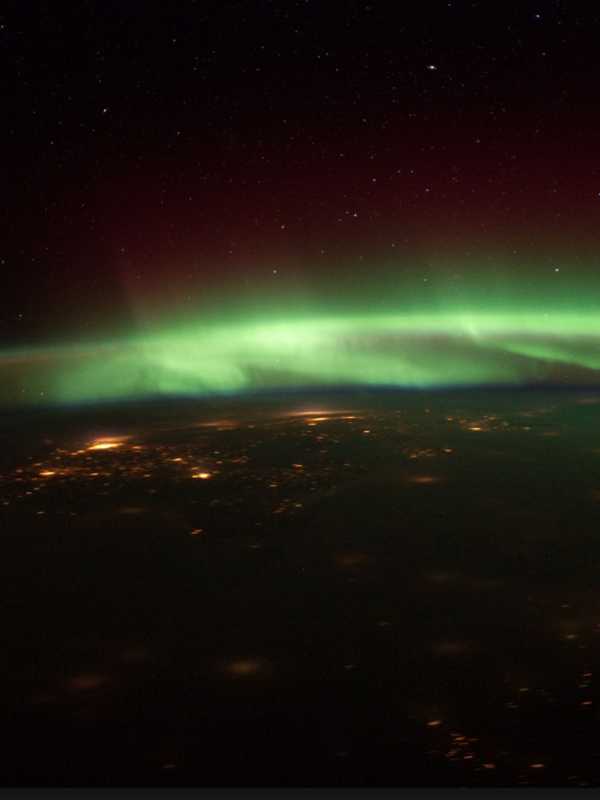
Northern Lights Will Dance Across Half Of US: Here's When To Catch Them The Northern Lights are headed South.  Forecasters say more than half of the United States may witness the Aurora Borealis on Monday, June 2, thanks to a powerful solar eruption known as a coronal mass ejection. Satellites detected the massive solar flare on Friday, launching a colossal cloud of charged particles toward Earth, according to NOAA’s Space Weather Prediction Center. The event is expected to trigger a strong geomagnetic storm, which will likely give the Northern half of the US a rare show. The aurora is usually reserved for skies near the North and South Poles, but solar e…
Parade Of Planets: Rare Celestial Lineup Set To Dazzle Night Skies Parade Of Planets: Rare Celestial Lineup Set To Dazzle Night Skies
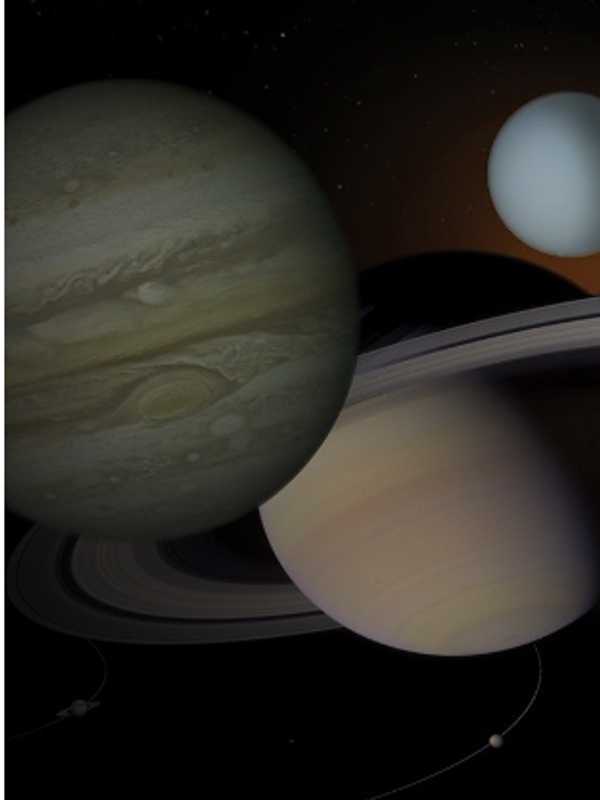
Parade Of Planets: Rare Celestial Lineup Set To Dazzle Night Skies A rare celestial phenomenon is about to light up the heavens, offering skywatchers a chance to marvel at the dynamic beauty of our Solar System.  This February, a "Parade of Planets" will see all seven of Earth’s planetary neighbors align in a dazzling display. The main event occurs on Friday, Feb. 28, when Saturn, Mercury, Neptune, Venus, Uranus, Jupiter, and Mars will appear in the night sky at the same time.  Stretching in a neat row along the ecliptic, this alignment promises to be a feast for the eyes, with bright Venus and Jupiter taking center stage while the fainter Neptu…