Find Your Daily Voice
GO
Tag:
Science Advances
National Interest
Hidden Source Of Alzheimer’s May Lie Outside Brain, Study Finds
Alzheimer’s disease, long seen as a disorder of the aging brain, may actually begin in an unexpected place: the mouth. Researchers reported evidence that a bacterium commonly associated with chronic gum disease could play a direct role in the development of Alzheimer’s. The study, published in Science Advances, details how Porphyromonas gingivalis, the pathogen behind periodontitis, was detected in the brains of Alzheimer’s patients. The findings come from an international team of scientists that included Jan Potempa, a microbiologist at the University of Louisville. Potempa said th…
National Interest
DC's Rat Infestation Growth Leads Nation Due To Climate Change: New Study Shows Why
Climate change is fueling a surge in rat populations across major US cities, with Washington, DC, seeing the worst increase over the past two decades, a new study said. The study published by Science Advances on Friday, Jan. 31, analyzed public records from 16 cities worldwide to determine why some urban environments are more infested with rats than others. The researchers found that 11 cities — including Washington, Boston, and New York City — had seen major rat population growth over an average of 12 years. Washington's increase was the most extreme, tripling compared to Bo…
Mamaroneck, NY
Weather
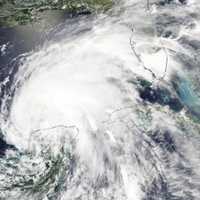
Future Hurricanes Could Have More Intense Rain, Study Projects
Future tropical cyclones, or hurricanes, will feature more intense rain with more rain produced per hour than previous storms but fewer hurricanes will make landfall, according to predictions in a brand-new study. The researchers at the School of Marine and Atmospheric Sciences at Stony Brook University announced the findings on Monday, June 15. Published early online in Geophysical Research Letters, the study, which used global climate modeling, suggests that while rain intensity is likely to increase the number of storms that make landfall in the United States will decrease. “Essentially…