-

by
Joe Lombardi
National Interest
Skywatchers will have the chance to see up to 20 meteors per hour as the Lyrid meteor shower peaks this week.The Lyrids mark the first major meteor shower since the Quadrantids in early January.Viewing conditions will vary across the US, with the best skies expected in the Southwest, Plains, and Midwest during the optimal viewing window: Tuesday night, April 21, into the early hours of ...
-
by
Joe Lombardi
National Interest
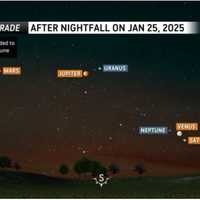
Skywatchers, get ready for an unforgettable weeks-long celestial spectacle.This rare phenomenon, nicknamed the "Parade of Planets," offers a unique opportunity for viewers to observe multiple planets in the night sky.What to ExpectShortly after sunset through mid-February, the six planets -- Jupiter, Mars, Neptune, Saturn, Uranus, and Venus -- will align across the night sky. "Venus, ...
-
by
Joe Lombardi
National Interest
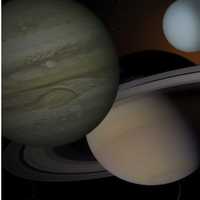
A rare celestial phenomenon is about to light up the heavens, offering skywatchers a chance to marvel at the dynamic beauty of our Solar System. This February, a "Parade of Planets" will see all seven of Earth’s planetary neighbors align in a dazzling display.The main event occurs on Friday, Feb. 28, when Saturn, Mercury, Neptune, Venus, Uranus, Jupiter, and Mars will appear in the ...
-
by
Joe Lombardi
National Interest
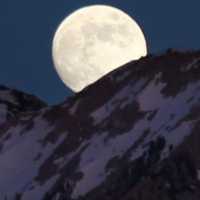
Skywatchers are in for a rare treat as January’s Full Wolf Moon aligns with Mars in a celestial event called a lunar occultation. On the evening of Monday, Jan. 13, the Moon will pass directly in front of Mars, temporarily hiding the planet from view in a stunning display visible across much of the world.When To WatchThe Full Wolf Moon will reach peak fullness at 5:27 p.m. EST on Jan. ...


