

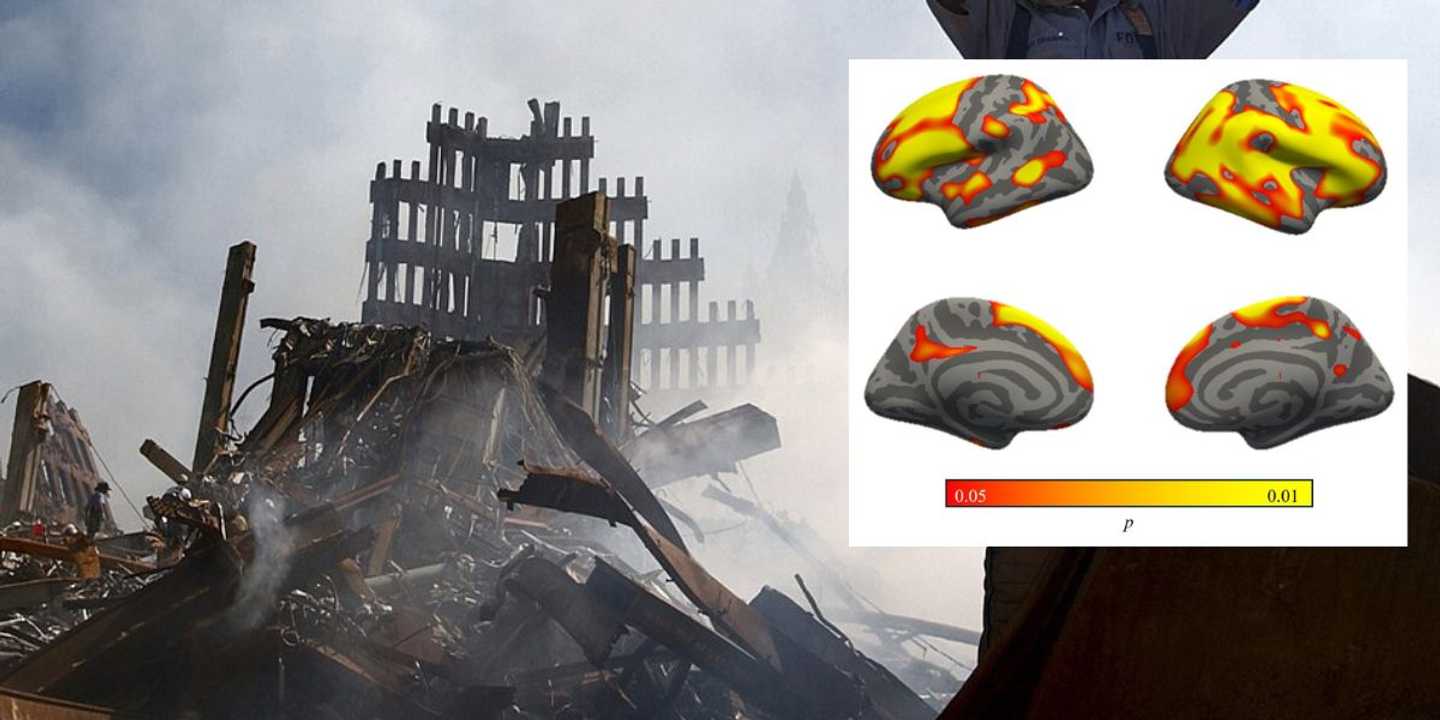

The findings come from a new brain imaging study led by researchers at Stony Brook University, which examined responders who worked at Ground Zero in the aftermath of the September 11, 2001, terrorist attacks.
Using advanced MRI techniques, researchers found that responders with chronic post-traumatic stress disorder showed clear differences in brain structure compared to those who were exposed to the same trauma but did not develop PTSD.
The research team used a technique that examines the contrast between gray matter, which processes information, and white matter, which helps transmit signals. When that contrast is reduced, it may indicate abnormal changes in the brain’s wiring that affect speed and consistency of communication.
The study analyzed brain scans from 99 responders, roughly half with PTSD and half without. Researchers found that in those with PTSD, areas of the brain normally involved in processing information showed signs of structural change, suggesting disruptions in how brain cells communicate.
In simple terms, the boundaries between different types of brain tissue appeared less distinct in responders with PTSD, which may affect how efficiently the brain processes signals, researchers said.
These changes were most closely linked to re-experiencing symptoms, such as intrusive memories and flashbacks.
Co-author Roman Kotov, a professor of psychiatry at Stony Brook, said the findings suggest science may be getting closer to identifying biological markers of PTSD.
“Biological tests for PTSD have eluded researchers for many years, but our study illustrates that modern analytic methods may be starting to reveal brain signatures of the disorder,” Kotov said.
The results were published in Biological Psychiatry: Cognitive Neuroscience and Neuroimaging.
Researchers were surprised by how widespread the changes appeared, affecting large areas of the brain rather than isolated regions.
“Our study shows that a structural brain imaging parameter could be helpful in differentiating people with PTSD from trauma-exposed responders without PTSD,” said lead author Sean Couston, a professor in the Department of Family, Population, and Preventive Medicine at the Renaissance School of Medicine.
“One theory is that the results imply PTSD symptoms are associated with a change in the cellular balance of the cortex.”
In the weeks and months following the Sept. 11, 2001 attacks, tens of thousands of firefighters, police officers, construction workers, volunteers, and other responders worked at Ground Zero amid toxic dust and extreme psychological stress. More than 400,000 people are estimated to have been exposed at the site.
Since then, thousands of responders have died from illnesses linked to their time at Ground Zero, and many more continue to battle physical and mental health conditions tied to the attacks.
Around 23 percent of responders developed PTSD after experiencing severe trauma at the site, according to data from World Trade Center health programs. Many continue to struggle with symptoms decades later.
Click here to follow Daily Voice and receive free news updates.
