

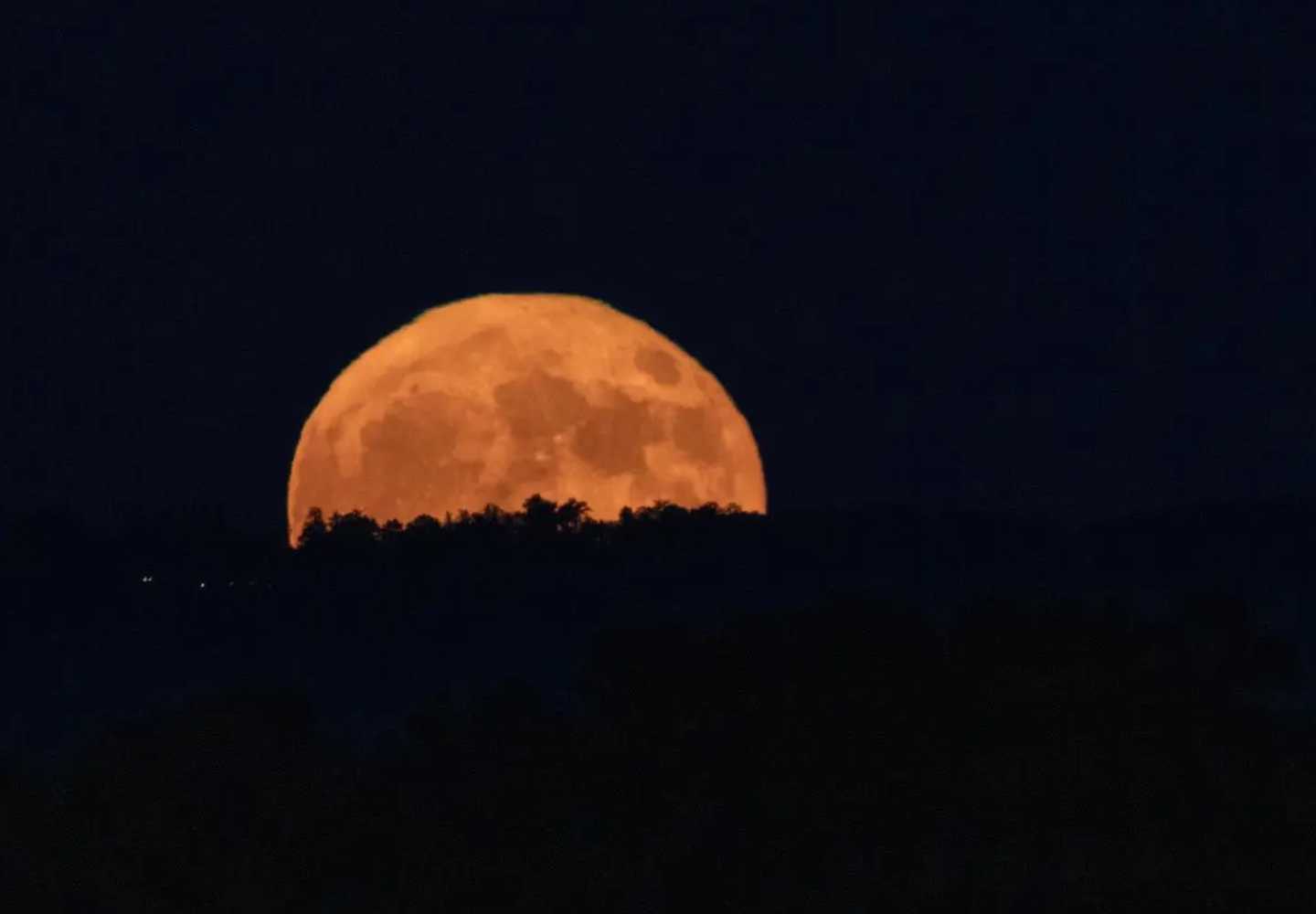

The full moon reaches peak illumination at 9:53 a.m. EST on Tuesday, Nov. 24.
For East Coast viewers, the practical viewing window comes outside that daytime peak. Look toward the eastern horizon around sunset and moonrise Monday, Nov. 23, or Tuesday evening.
The moon will appear full to the naked eye across several nights, extending the viewing opportunity into Wednesday, Nov. 25. Local moonrise times vary, so check your location before heading out.
A clear eastern view matters more than special equipment. Choose an open spot where buildings and trees won’t block the rising moon. The Almanac’s moonrise calculator provides local timing, helping viewers plan around the horizon rather than the precise moment of fullness.
What makes this moon super?
The moon travels around Earth along an oval-shaped orbit, bringing it closer at some points and farther away at others. A full moon near its closest approach, called perigee, can appear slightly larger and brighter than an average full moon, NASA explains.
The difference is subtle. NASA notes that even a supermoon can be difficult to distinguish by size alone. The term is not an official astronomical classification, and it does not mean the moon will suddenly look enormous.
November’s nickname has a more down-to-earth explanation.
NASA links the Beaver Moon name to seasonal traditions associated with beavers preparing for winter, strengthening their dams, and gathering food. November also marked a trapping season when the animals had thick winter pelts.
Viewers may notice a golden or orange appearance as the moon rises near the horizon. Its bright glow can also make nearby faint stars harder to see.
For this show, the main attraction is the moon itself. Pick a clear evening, find an unobstructed horizon, and give it time to climb above the surrounding landscape.
Click here to follow Daily Voice and receive free news updates.
