

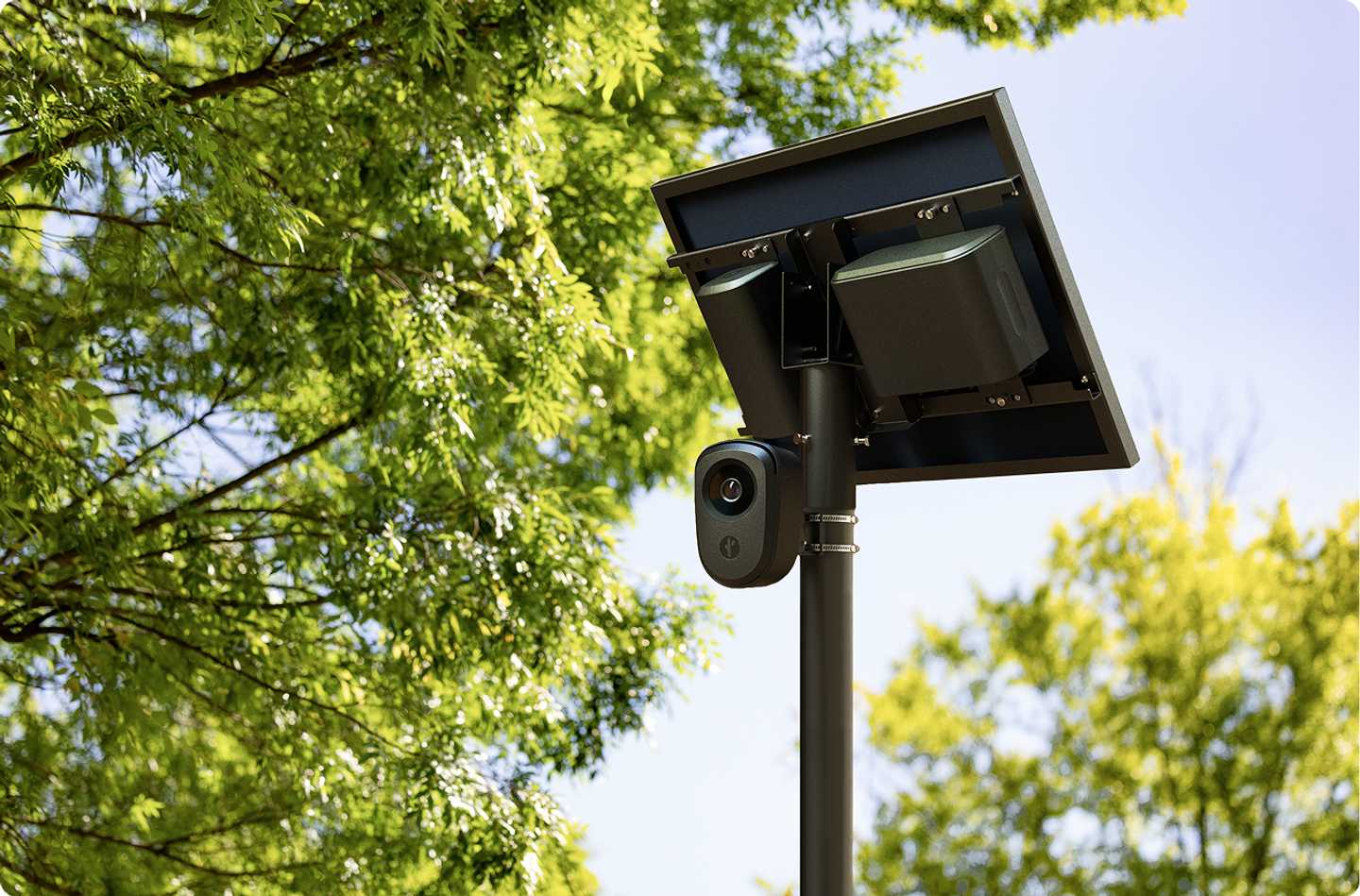


The company announced the updates in a blog post on Thursday, Aug. 13. Flock says it will cut its recommended default retention period for automatic license plate reader (ALPR) data from 30 to seven days.
The changes also include new safeguards that Flock says will prevent law enforcement from misusing data. Flock will require agencies to use a system that flags unusual searches, automatically locks some users out pending review, and uses case codes for searches by the end of 2026.
Unlike red-light or speed cameras, Flock and other ALPR cameras continuously record passing vehicles rather than activating only when a specific traffic violation occurs. Flock's system catalogs license plate information and other vehicle details that police can search later in a database.
Flock claims that its technology helps police solve more than 1 million crimes each year.
"These changes reflect years of work and deliberation," Flock founder and CEO Garrett Langley wrote. "They are not the end of that work, but simply the continuation of our commitment to both safety and privacy. We are not perfect, so we will keep listening, improving, and building a better standard for public safety technology together."
Many communities and elected officials have pushed back against the more than 120,000 Flock cameras installed across the country. Websites like FlockHopper and DeFlock have been launched to show reported camera locations.
Earlier in August, Connecticut Gov. Ned Lamont asked cities and towns to pause new installations of ALPRs and other police cameras while state officials review how the technology is being used and what privacy protections should apply.
"Citizens are justifiably concerned about technology that may keep roadways safe, on the one hand, but that may potentially collect a vast amount of data about drivers, on the other," Lamont wrote in a letter to the Connecticut Police Officers Standards and Training Council. "While I believe that Public Act 26-14 went a long way in addressing and appropriately balancing these concerns, questions remain about what type of technology is being deployed, where these cameras are being installed, and how the data is being used and shared."
Police in Ramapo, New York, also halted plans to test more ALPRs after similar concerns were raised.
"Technology should never be adopted simply because it is available," police chief Daniel Hyman said in a statement on Monday, Aug. 10. "It must serve a legitimate public-safety purpose, reflect the expectations of our community, and be balanced against the constitutional protections we are sworn to uphold."
Flock said it will roll out "Evidence Mode," allowing investigators to keep specific ALPR data for active investigations beyond the normal retention period. Flock's default ALPR retention period was originally set at 30 days when the company launched in 2017.
More than 90% of searches without a full license plate are conducted within one week, according to Flock.
"Existing customers will keep their current, democratically approved retention periods," wrote Langley. "Customers who adopt the seven-day recommendation will receive Evidence Mode at no cost. Every community will continue to choose the retention period that fits its public safety strategy."
Flock is also adding limits on data sharing based on suspected offenses. Under the new system, one police agency could allow another to search its cameras for violent crimes, stolen vehicles, or missing people while blocking searches connected to immigration enforcement.
Critics have warned that local law enforcement departments have conducted Flock searches on behalf of federal agencies amid President Donald Trump's mass deportation policies.
Flock doesn't have a formal contract with Immigration and Customs Enforcement or Customs and Border Protection, but 404 Media reported in May 2025 that police agencies ran more than 4,000 searches on behalf of the Trump administration or federal officers.
The American Civil Liberties Union has called Flock cameras a "mass surveillance tool" that "can be weaponized and abused."
"ICE and CBP have repeatedly used Flock to go after immigrants without warrants," the ACLU said. "Kansas police used them to pursue a man who wrote a critical op-ed about the department, while a Colorado police officer wrongfully accused a woman of theft based on a Flock hit and then refused to look at evidence proving her innocence. A mother and her children were held at gunpoint because ALPR cameras wrongly flagged their car as stolen."
Flock has claimed that it doesn't directly give data to ICE, but local departments can choose to share data with agents.
"If a local agency chooses not to collaborate with any federal entity, including ICE, Flock has no ability to override that decision," Flock wrote in January. "Similarly, if a community chooses to work with a federal agency, Flock has no ability to change that decision."
Flock is also expanding a system called Audit Assistance, which flags "abnormal activity" for review by an agency administrator. The company said the feature was introduced about four months ago and has been voluntarily adopted by more than one-third of its customers, which can include non-law enforcement groups like businesses, homeowners associations, and schools.
Flock also plans to automatically suspend users suspected of abnormal behavior until an administrator reviews the account.
"In recent weeks, those reviews have been associated with arrests of several law enforcement officers who allegedly abused the system," said Langley.
By the end of 2026, all law enforcement customers will be required to use Audit Assistance and case codes will become mandatory for all police searches. Officers will be able to bypass the requirement during emergencies, but those searches will be flagged for administrator review.
ACLU senior policy counsel Chad Marlow said the update doesn't change that Flock still compiles "billions and billions of license plate scans every month on people who have done nothing wrong."
"Flock collects location data on virtually every car in America every month and then facilitates the nationwide sharing of that data where it can be used to target members of vulnerable and disfavored communities and to undermine the privacy and chill the behavior of everyone in America," Marlow told NBC News.
The ACLU has pushed for a 48-hour limit on the retention of ALPR data. The civil rights organization also claims that less than 1% of license plates scanned by ALPR systems are connected to crimes or wrongdoing.
Flock said it expects to publish a summary of an independent review of its products and security practices in September.
Click here to follow Daily Voice and receive free news updates.
