


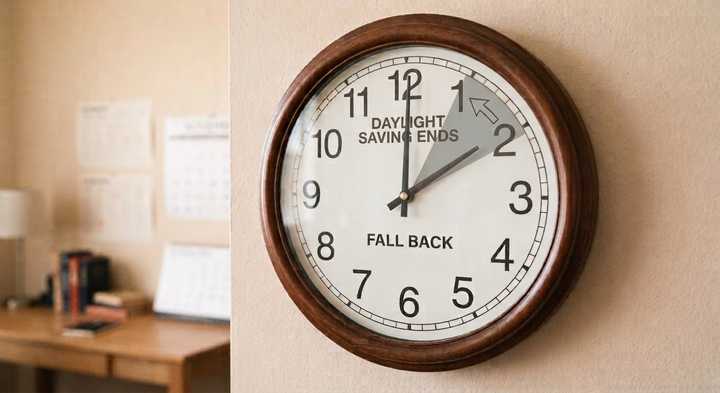

Daylight saving time ends Sunday, Nov. 1, when clocks across most of the US turn back from 2 a.m. to 1 a.m. local time, according to the National Institute of Standards and Technology.
Both sunrise and sunset will shift about an hour earlier by the clock. That brings more morning light, but less daylight for errands, outdoor activities, and the trip home from work.
AccuWeather says New York City, Chicago, Denver, Los Angeles, and Seattle will all see sunset before 5 p.m. Sunday. For millions of people, the adjustment will put everyday afternoon activities on the darker side of sunset.
“The time change can really catch people off guard, especially when they’re leaving work or picking up their kids and suddenly find themselves doing those activities after sunset,” said AccuWeather expert meteorologist Tyler Roys. “While we aren’t actually losing an hour of daylight when the clocks change, shifting that daylight to the morning can make evenings feel much shorter.”
The difference will be especially noticeable farther north. AccuWeather puts Sunday’s sunset in Caribou, Maine, at 4:16 p.m. Houston and Miami will retain later sunsets, at 5:34 p.m. and 5:39 p.m., respectively.
The clock reset is separate from the seasonal loss of daylight already underway.
Seattle will lose more than 70 minutes of daylight during November, compared with roughly 30 minutes in many Gulf Coast communities, according to AccuWeather.
Daylight continues shrinking toward the Northern Hemisphere’s winter solstice on Monday, Dec. 21. The earliest sunset generally arrives before then, typically in early December in many locations.
If you're hoping to squeeze in a walk or outdoor chores after work, checking local sunset times can help you plan.
Before bed on Saturday, Oct. 31, turn manual clocks back one hour. Check appliance and vehicle clocks, as well as automatic time settings on phones and computers.
Hawaii and most of Arizona do not observe daylight saving time. The Navajo Nation does, according to NIST.
Check back with Daily Voice for the latest updates.
Click here to follow Daily Voice and receive free news updates.
