

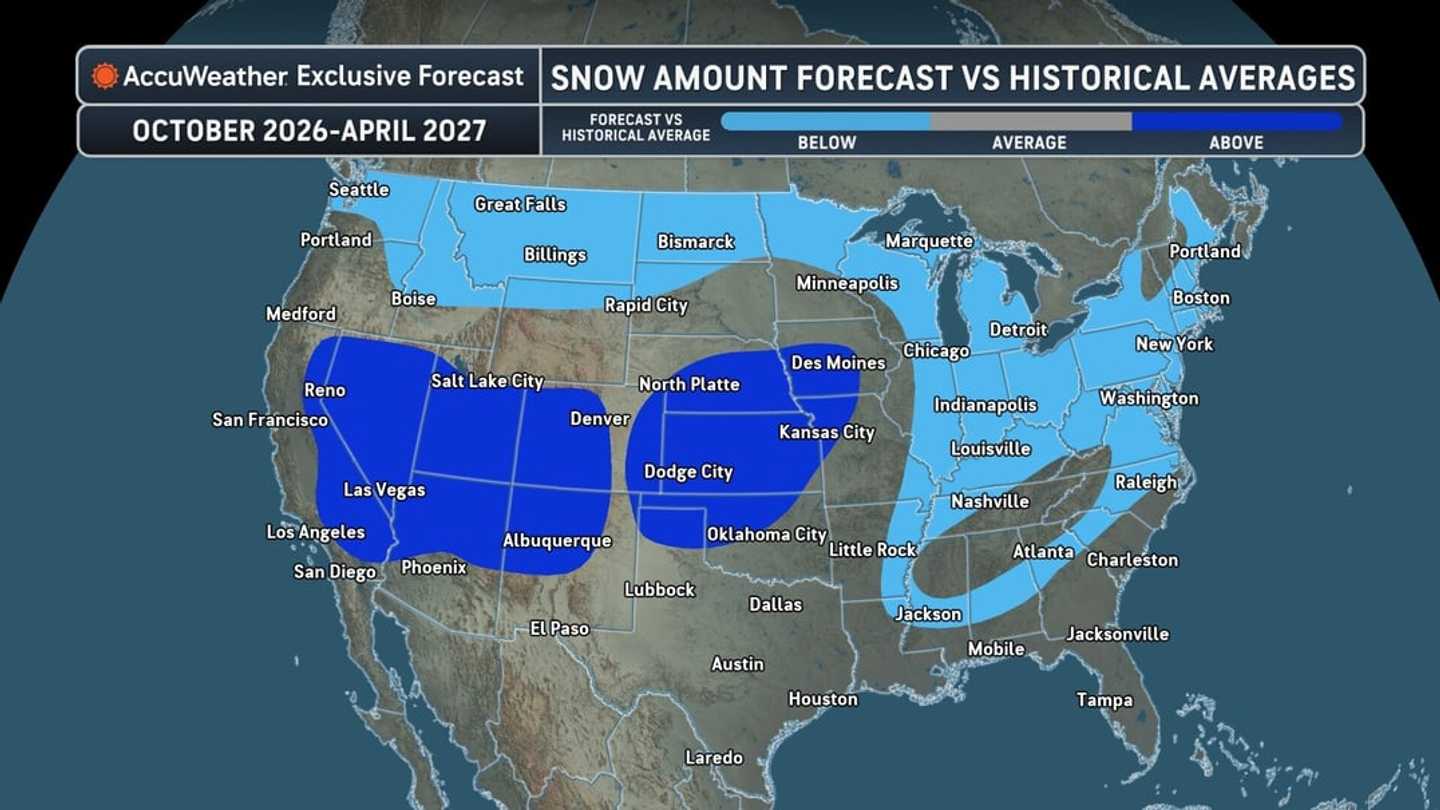


AccuWeather's 2026-27 winter forecast favors below-average snowfall across much of the region. Its supplied graphics also project fewer days with measurable snow.
Among the five Northeast cities listed in AccuWeather’s snowfall chart, Buffalo has the highest projected total. All five, however, fall below their historical averages:
- New York City: 10 to 20 inches, compared with 29.8 inches.
- Boston: 15 to 30 inches, compared with 49.2 inches.
- Philadelphia: 5 to 15 inches, compared with 23.1 inches.
Those city estimates are not statewide forecasts. AccuWeather’s broader map places much of the New York-to-Washington corridor, including areas of New Jersey and Connecticut, within its below-average snow zone.
The company expects a potentially historic El Niño to favor a more active southern storm track. Warmer-than-average conditions across the Northeast and Great Lakes could limit snowfall.
Nationally, its above-average snow zone stretches across parts of the Sierra Nevada, central and southern Rockies, and central Plains. That shading indicates departures from local averages, not which places will receive the most inches.
Rain could become a bigger concern along portions of the Mid-Atlantic coast, including areas of Maryland and Virginia.
“Everyone talks about winter," said AccuWeather lead long-range expert Paul Pastelok, "and the first thing they think of for records, is record cold, right? Record Snow?
"But it may be different this year. It may be more about rainfall this year, coastal flooding, and rivers rising. That’s something you talk more about during the spring, but it could be the opposite this year."
The outlook differs from the Old Farmer’s Almanac forecast previously covered by Daily Voice. That publication predicts snowier-than-normal conditions across parts of the interior Northeast and Appalachians, while its Atlantic Corridor region gets slightly below-normal snowfall.
The Almanac’s regional outlook also separates a warmer, less snowy northern Northeast from a colder, snowier southern portion.
Both are seasonal predictions. Neither establishes the timing, track, or snowfall total of an individual storm.
Check back with Daily Voice for the latest updates.
Click here to follow Daily Voice and receive free news updates.
